How to Improve Your Aim in Battle Games: Beginner Guide 2026
To improve your aim in battle games, use a comfortable low sensitivity, practice tracking and flicking for 15 to 20 minutes a day, keep your crosshair at head height, and learn one weapon’s recoil at a time. Fix your setup first, then build steady habits through short, focused practice instead of long, random matches.
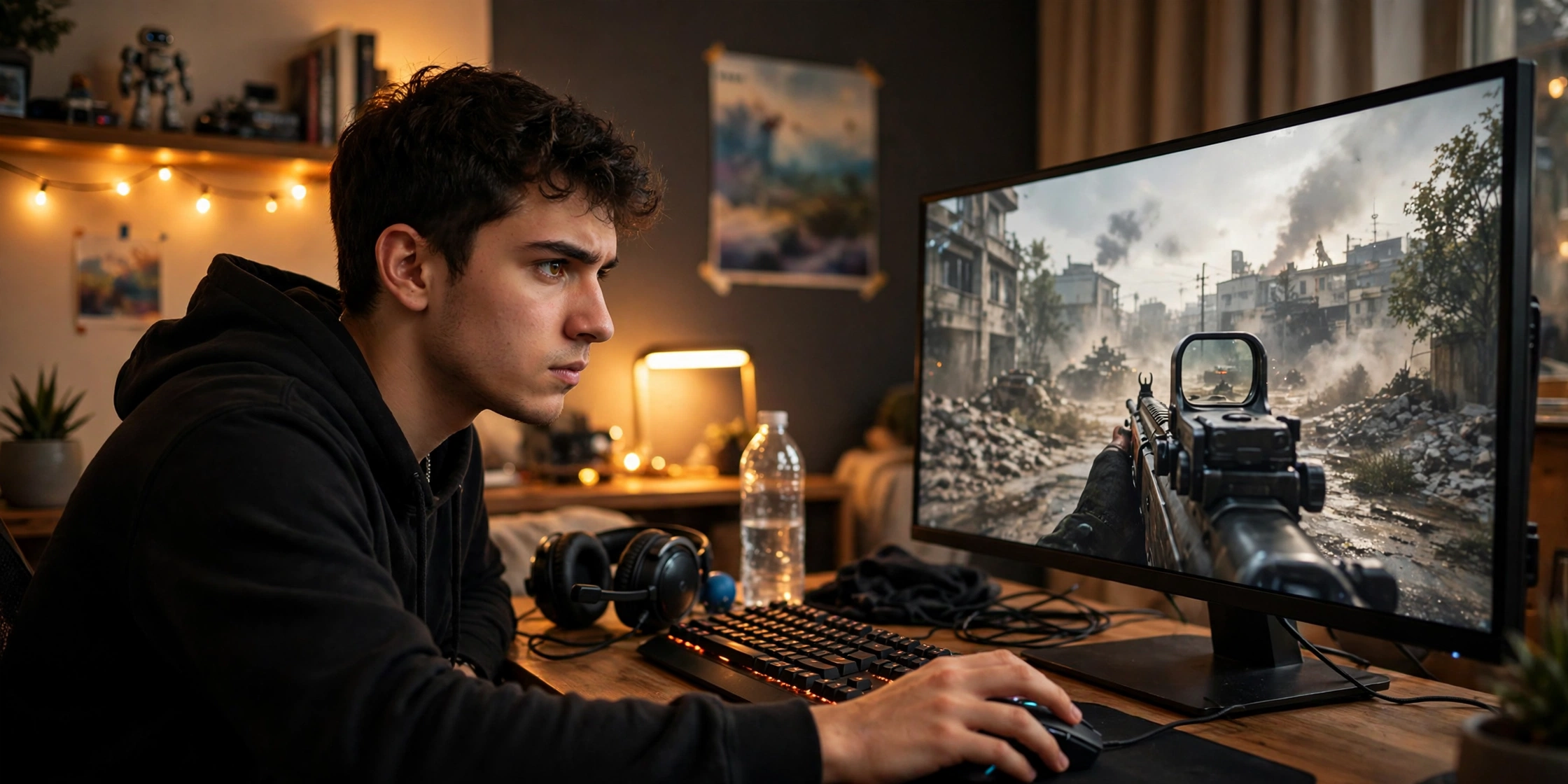
If you have ever lost a fight you should have won, you are not alone. Almost every new player in battle games feels the same frustration: the enemy appears, you panic, your crosshair jumps everywhere, and you are back at the respawn screen before you know what happened. The good news is that aim is a skill, not a talent you are born with. It can be trained, measured, and improved step by step, even if you have never played a shooter before.
This guide is written for beginners in the USA who play games like Call of Duty, Fortnite, Apex Legends, Valorant, PUBG, and Counter-Strike 2. You do not need an expensive mouse, a 240Hz monitor, or thousands of hours to see real progress. You need the right settings, a simple practice routine, and a clear understanding of what good aim actually looks like in a real match. For more gaming guides, tips, and setup advice, visit the PlayBattleSquare homepage and explore the latest articles for beginners.
What Does Good Aim Actually Mean in Battle Games?
Good aim is not just fast flicks or flashy highlight clips. In a real match, good aim means hitting the shots that matter, at the right time, without wasting bullets or exposing yourself. A player with steady, reliable aim will beat a player with wild, lucky flicks almost every time, because consistency wins fights and saves health, armor, and ammunition.
There are three main types of aim you need to understand. Tracking is following a moving enemy smoothly with your crosshair, which matters most in fast games like Apex Legends and Fortnite. Flicking is snapping your crosshair quickly to a target that appears suddenly, which matters in Valorant and Counter-Strike 2. Target switching is moving from one enemy to the next without hesitating, which matters in team fights and close-range battles. Most beginners are weak in all three, and that is normal. The goal is to improve them one at a time.
A first-person shooter is a game where you see the action through your character’s eyes, and aiming is the core skill that separates new players from experienced ones. That perspective makes small mouse movements feel big, so learning control matters more than learning speed. Speed comes later, once your hand knows where the target is without you thinking about it.
What Sensitivity Should a Beginner Use?
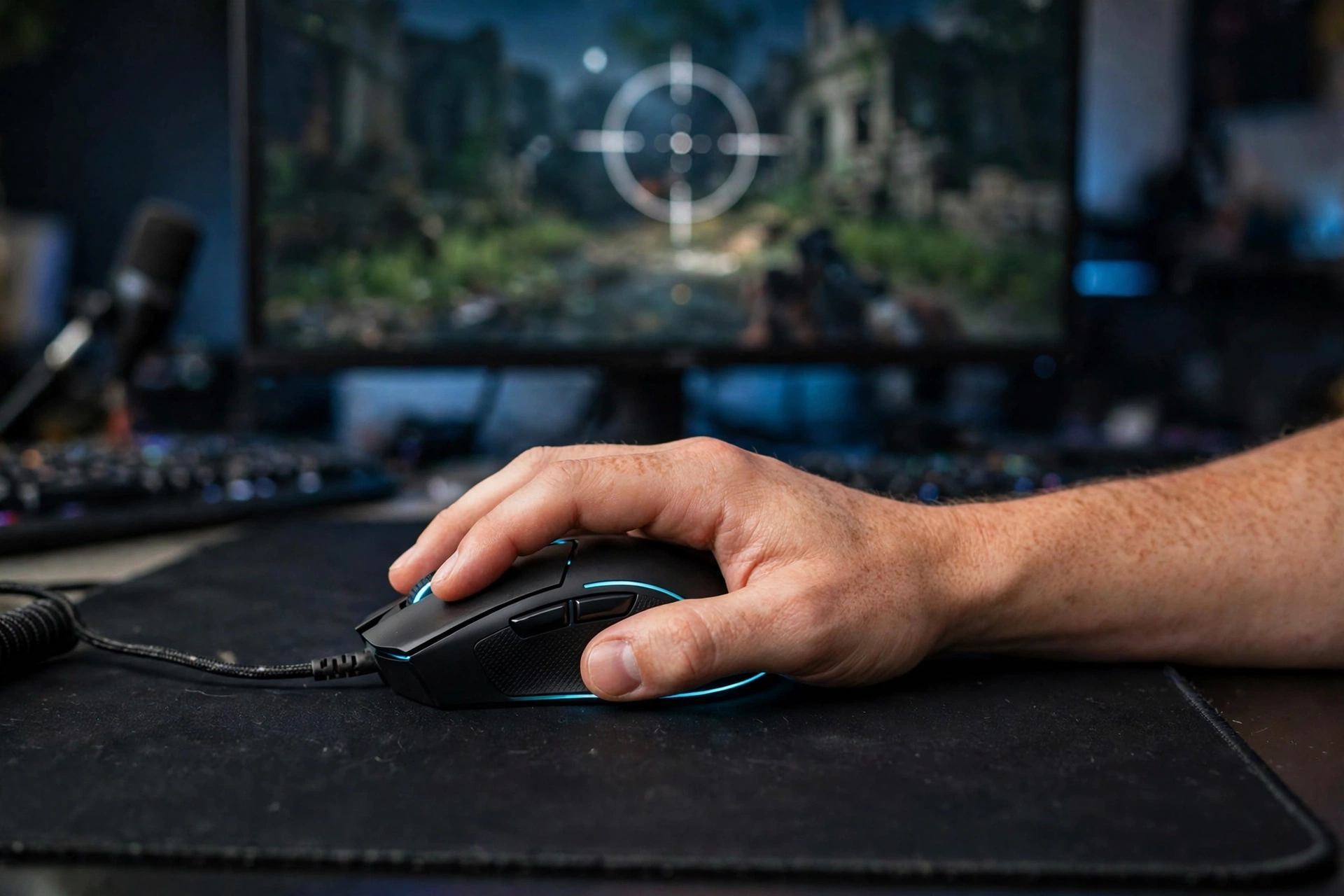
Sensitivity is personal, but there is a reliable starting point that works for most beginners. On PC, set your mouse DPI to 800 and your in-game sensitivity to a level where a full swipe across your mousepad turns your character about 180 degrees. For many players, that means a low-to-medium in-game sensitivity. The exact number matters less than the feeling: you should be able to turn around comfortably without lifting your mouse more than once.
Here is a simple test. Stand in a practice range, pick a target on a wall, and flick to it ten times. If you overshoot past the target most of the time, your sensitivity is too high. If you undershoot and stop short, it may be too low. If you land on the target or just beside it, you are close. Adjust in small steps, then stop changing it. The biggest mistake beginners make is changing sensitivity every day. Your hand needs at least a week on one setting before it can learn it.
On console, the same idea applies. Lower your look sensitivity slightly, turn off any extreme aim acceleration if your game allows it, and use a small deadzone so your sticks respond cleanly. Controller players should also learn to strafe-aim: move your character left and right to line up shots instead of only pushing the right stick. This is one of the fastest ways to improve controller aim.
How Do I Set Up My Crosshair and Mouse the Right Way?
Your crosshair should help you aim, not distract you. Choose a simple crosshair with a small gap, a bright color that stands out against most backgrounds, and no thick outline that hides the enemy’s head. Green, cyan, and yellow work well in most games. Avoid crosshairs that are too large, too fancy, or animated, because they make it harder to judge exactly where your bullets will land.
Your mouse setup matters just as much. Turn off mouse acceleration in Windows, because acceleration makes the same hand movement travel different distances depending on speed, and your muscle memory can never settle. Use a mousepad that is at least medium-sized so your arm has room to move. Keep your mouse at the same DPI in every game so your hand learns one feeling. If your mouse has extra buttons, bind one to a useful action like crouching or pinging, but do not overload yourself with bindings you will forget in a fight.
What Is the Best Daily Aim Practice Routine for Beginners?
You do not need to practice for hours. Fifteen to twenty minutes a day, done consistently, will improve your aim faster than a single three-hour session once a week. Here is a simple routine you can follow in any aim trainer, such as Aim Lab or KovaaK’s, or in your game’s own practice range.
Start with five minutes of tracking practice. Follow a moving target smoothly without clicking, then add shots once your crosshair stays on the target. Next, spend five minutes on flicking: snap to targets that appear in different places, focusing on stopping exactly on the target rather than moving fast. Then spend five minutes on target switching, moving from one target to the next as quickly as you can while staying accurate. Finish with five minutes in your game’s practice range using your main weapon, practicing the exact shots you miss most in matches.
How Does Crosshair Placement Improve Aim Instantly?
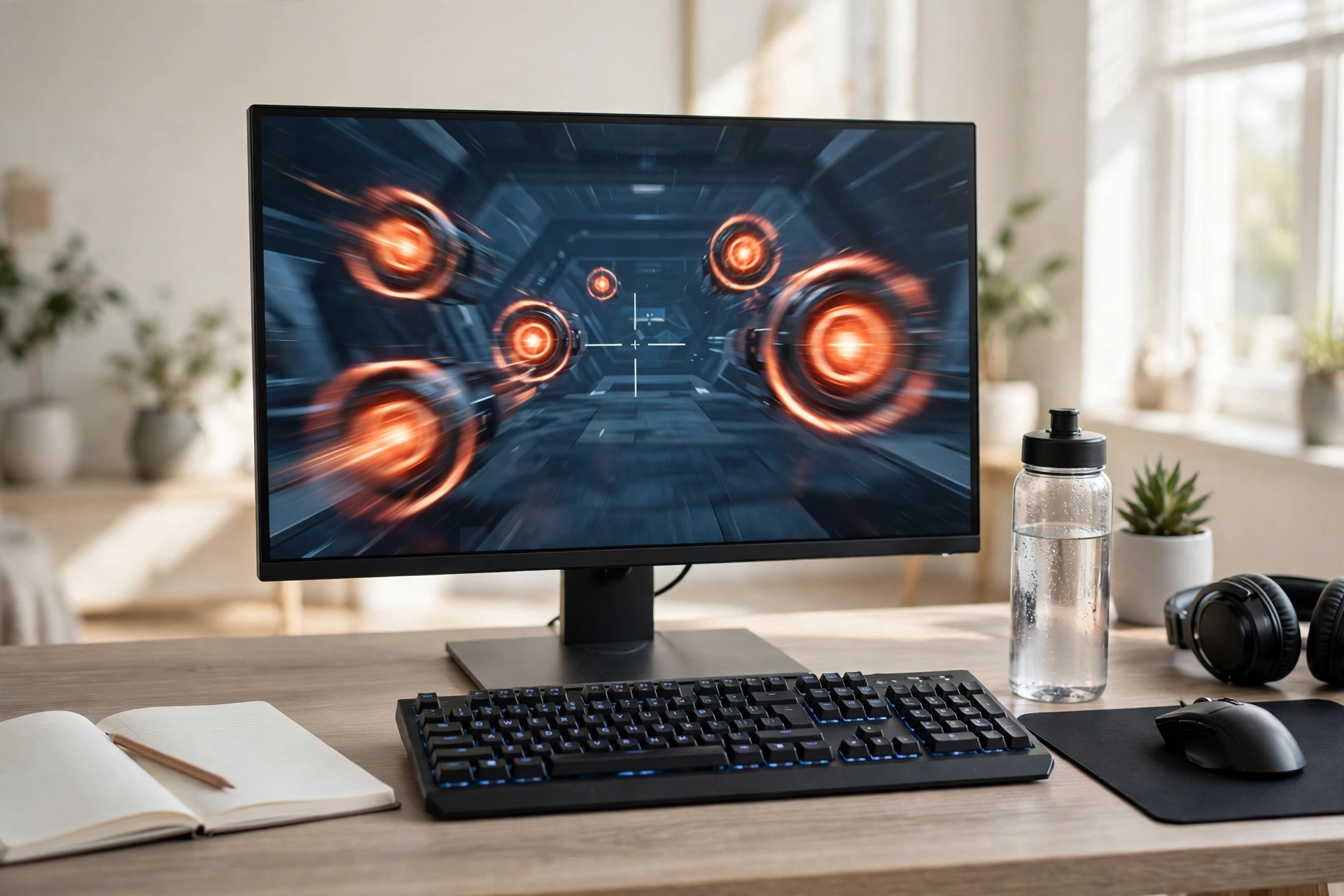
Crosshair placement is the fastest free improvement in battle games. It means keeping your crosshair where an enemy’s head is likely to appear before you see them. Most beginners walk around aiming at the ground, at walls, or at chest height, and then they have to flick upward when an enemy appears. That extra movement costs time and accuracy. Good players keep their crosshair at head height and near corners, doorways, and cover, so the enemy walks into their crosshair.
Crosshair placement also helps with recoil control. Every weapon has a recoil pattern: when you hold the trigger, bullets climb upward in a mostly fixed pattern. Start with one rifle, shoot a wall in the practice range, and learn to pull your mouse down gently to keep the bullets in a tight group. At long range, fire in short bursts of three to five shots. Master one rifle, one close-range weapon, and one long-range option before adding more.
How Long Does It Take to Improve Your Aim?
Most beginners see noticeable improvement in two to four weeks with daily practice. Your flicks will feel smoother, your crosshair will stay closer to head height, and you will win more close fights. Bigger improvements, like consistently winning long-range duels or tracking fast-moving enemies, usually take two to three months. That timeline is normal, and it is worth it.
Set small goals instead of vague ones. This week, aim for slightly higher accuracy in your practice routine. Next week, focus on keeping your crosshair at head height in every match. The week after, work on recoil control with your main rifle. Small goals keep you motivated and show you real progress, while a vague goal like “get better aim” feels impossible to measure.
Frequently Asked Questions
How can I improve my aim fast as a beginner in battle games?
You can improve your aim fast by lowering your sensitivity to a controllable level, practicing tracking and flicking for 15 to 20 minutes a day, and keeping your crosshair at head height in every match. Focus on one weapon at a time and avoid changing settings daily, because consistent practice builds muscle memory faster than constant adjustments.
What is the best sensitivity for beginners in battle games?
The best sensitivity for beginners is a low-to-medium setting where a full mousepad swipe turns your character about 180 degrees, often starting at 800 DPI with a low in-game sensitivity. Test it by flicking to targets ten times: if you overshoot often, lower it slightly, and if you undershoot often, raise it slightly, then keep it fixed for at least a week.
Should beginners use an aim trainer or just play more matches?
Beginners should use both, because aim trainers give you hundreds of clean repetitions in minutes, while matches teach you real timing, positioning, and pressure. Warm up in an aim trainer or practice range for 10 to 20 minutes, then play matches to apply what you practiced, and review one mistake after each session.
Does a better mouse or monitor improve aim in battle games?
A better mouse or monitor can help, but it will not fix bad habits on its own. A reliable mouse with a good sensor and a monitor with at least 120Hz to 144Hz refresh rate makes aiming feel smoother, yet most beginners improve more from fixing sensitivity, crosshair placement, and practice habits than from buying new gear.
How long should I practice aim each day to see results?
You should practice aim for 15 to 20 minutes a day to see results in two to four weeks, because short daily sessions build muscle memory better than rare long sessions. Combine that practice with regular matches, take breaks when you feel tilted, and track your accuracy weekly to see steady progress over time.